Podgórze: Kraków’s Riverside Quarter and Ghetto Memory
Across the Vistula from Kazimierz lies Podgórze — for most of its history a separate town, during the Second World War the site of the Kraków ghetto, and today one of the city’s most characterful and creative quarters. It rewards a slow half-day of walking, mixing sombre memory with river views, a prehistoric mound and some of Kraków’s best independent cafés. For the wider picture, see our Kraków travel guide and things to do in Kraków.
A town of its own
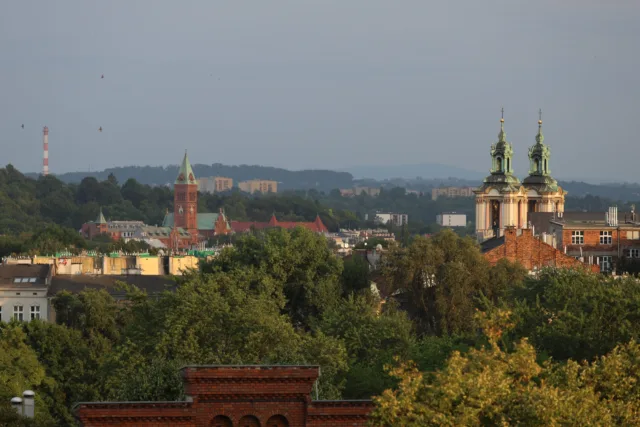
Podgórze was founded as a free royal town in the 18th century, on the right bank of the Vistula, and kept its independence until it was joined to Kraków in 1915. That history still shows in its own market square, the Rynek Podgórski, watched over by the neo-Gothic St Joseph’s Church, whose soaring spire is one of the landmarks of the right bank. The streets around it have the feel of a small town folded into a big city.
Wartime memory
In 1941 the German occupiers forced Kraków’s Jews into a walled ghetto in Podgórze; from here they were deported to the camps. Several places keep that memory:
- Ghetto Heroes Square (Plac Bohaterów Getta) — the deportation point, now filled with a moving memorial of empty bronze chairs.
- The Eagle Pharmacy (Apteka pod Orłem) — run through the ghetto years by Tadeusz Pankiewicz, the only non-Jew who stayed, now a small museum.
- Fragments of the ghetto wall, and nearby Schindler’s Factory, covered in our Schindler’s Factory guide.
These are places of remembrance; visit them with the quiet they ask for.
Krakus Mound and Liban Quarry
Above Podgórze rises the Krakus Mound, the oldest of Kraków’s man-made hills, of uncertain prehistoric origin and linked by legend to the city’s mythical founder. It is a free, breezy climb with one of the finest panoramas of the whole city. Below it lies the overgrown Liban Quarry, a strange, atmospheric hollow with a wartime past and, these days, abundant wildlife.
Modern Podgórze
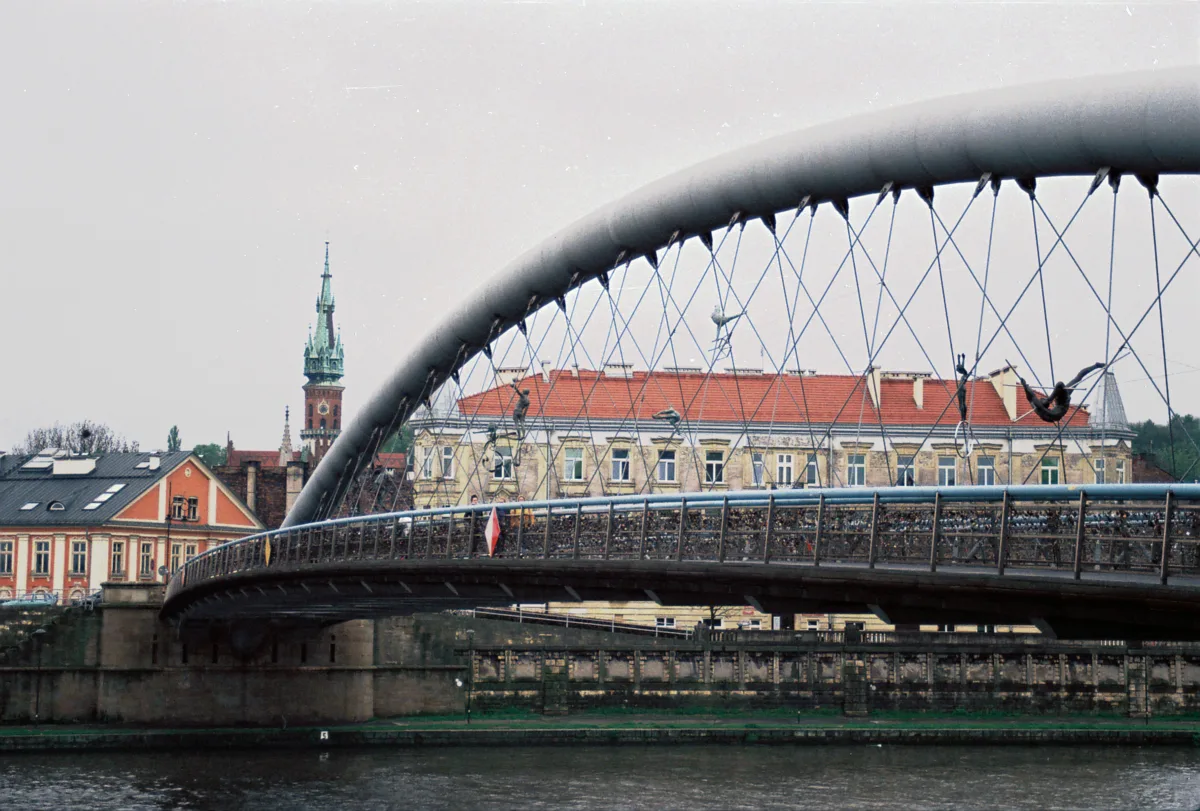
Podgórze today is as much about the living city as the past. The graceful Bernatek Footbridge links it to Kazimierz across the river, hung with love padlocks and acrobat sculptures. MOCAK, the Museum of Contemporary Art, and Cricoteka, devoted to the avant-garde theatre-maker Tadeusz Kantor, anchor its cultural scene, and the riverside and backstreets hide a growing crop of cafés, bakeries and small restaurants.
Practical tips
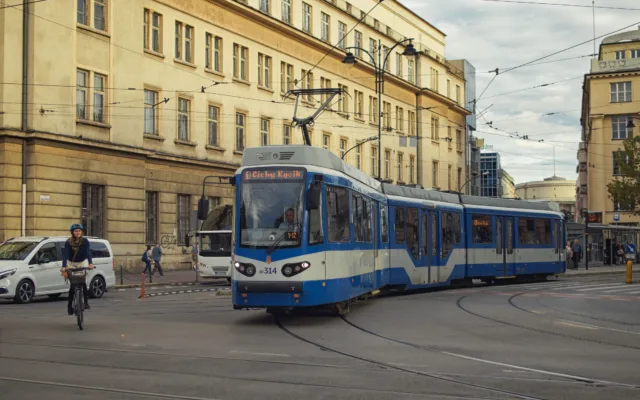
- Getting there. Cross the Bernatek Footbridge from Kazimierz on foot, or take a tram over the river; the quarter is best explored walking.
- Cost. Wandering, the Rynek, the mound and the memorials are free; the Eagle Pharmacy, MOCAK and Cricoteka charge modest entry.
- A walking route. Start at Ghetto Heroes Square and the Eagle Pharmacy, walk up to Krakus Mound for the view, then come back down to the Rynek Podgórski and the river.
- Combine it. Podgórze pairs naturally with Kazimierz across the bridge and with Schindler’s Factory to continue the wartime story.
Frequently asked questions
A former separate town across the river from Kazimierz, Podgórze was the site of the wartime Kraków ghetto and is today a creative riverside quarter with memorials, the Krakus Mound and a lively café scene.
Plac Bohaterów Getta was the deportation point of the Kraków ghetto. It is now filled with a memorial of empty bronze chairs, recalling the people and belongings left behind.
Apteka pod Orłem, run through the ghetto years by the pharmacist Tadeusz Pankiewicz — the only non-Jew who stayed inside the ghetto. It is now a small museum of those events.
On foot across the Bernatek Footbridge, a short, pleasant walk over the Vistula, or by tram over one of the nearby bridges.
Yes — it is free and open, the oldest of Kraków’s man-made mounds, with one of the best panoramas of the whole city. It is an easy climb above Podgórze.
A half-day lets you take in the ghetto memorials, climb Krakus Mound and still have time for the Rynek Podgórski, the river and a coffee.
Comments
No comments yet — be the first on the forum.
Add a comment on the forum →