Krakow Travel Guide: What to See, Do and Know
Kraków was the seat of Polish kings for over five centuries, and unlike most of the country it came through the Second World War with its historic core intact. That core — the medieval Old Town, the royal hill of Wawel and the old Jewish quarter of Kazimierz — was one of the first sites ever added to the UNESCO World Heritage list, back in 1978. What makes the city rewarding, though, isn’t just the monuments: it’s how much sits within walking distance, how deep the history runs, and how little you need to spend to enjoy it.
This guide covers the essentials — a little history, when to come, how long to stay, what to see, where to sleep, where to go next and what to know before you arrive. Each section links to a fuller article if you want to go deeper.
Kraków at a glance
- Language: Polish (English widely spoken in tourist areas)
- Currency: Polish złoty (PLN) — not the euro
- From the airport: ~11 km; train to the centre in about 20 minutes
- Ideal stay: 2–3 days for the city, plus a day for each major trip
- Best months: May–June and September; December for the Christmas market
A thousand years in brief
Kraków’s founding legend has a prince called Krakus building his castle on a hill above the Vistula, over the lair of a dragon — the same Wawel hill you can climb today. The first written record comes from the 960s, when a travelling Arab merchant described it as a busy trading town. By 1038 it was the capital of Poland, and for the next five and a half centuries kings were crowned and buried at Wawel. Its university, founded in 1364, is one of the oldest in this part of Europe; a young Nicolaus Copernicus studied there in the 1490s.
The court moved to Warsaw in 1596, but Kraków kept its status as the coronation city. Later it spent a long spell under Austrian rule, which left its own architectural mark. During the Second World War the city became the seat of the German occupation authorities and, unlike Warsaw, survived largely undamaged — but the Jewish community that had lived in Kazimierz for centuries was confined to the Podgórze ghetto and then murdered. After the war the communist government built the steelworks and planned town of Nowa Huta on the eastern edge, intended as a workers’ counterweight to the old university city. Both halves of that story are still visible today.
Why visit Kraków
Three things set Kraków apart from other European city breaks:
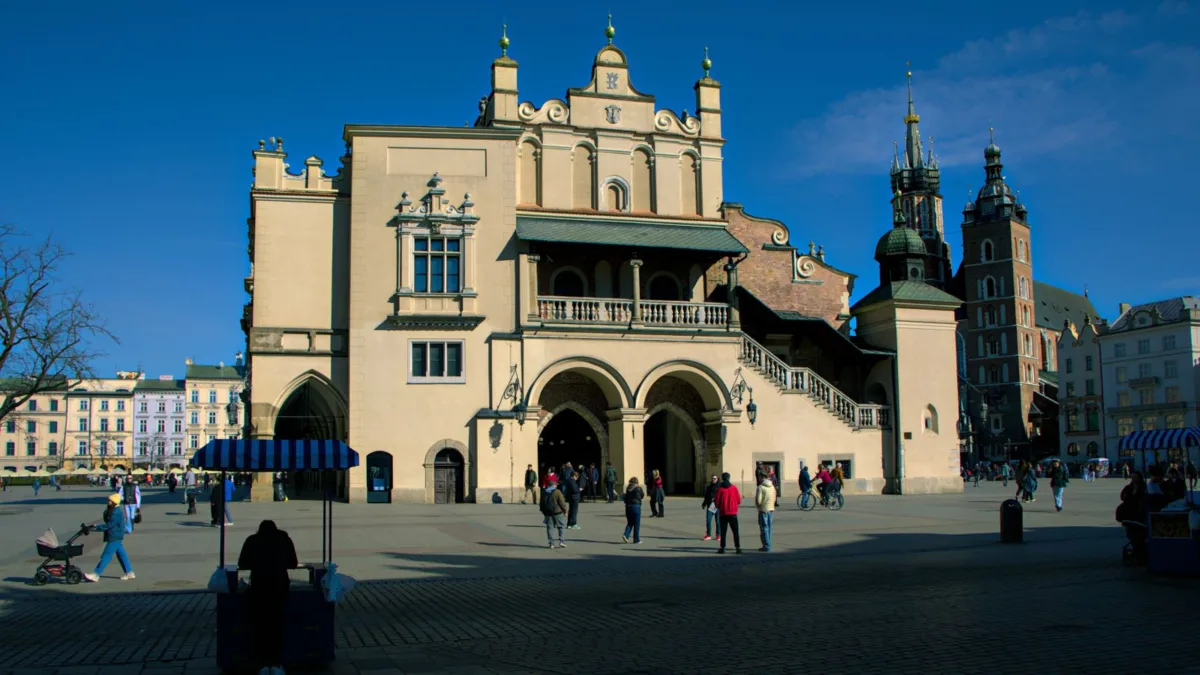
- An intact medieval centre. The Main Market Square (Rynek Główny) is one of the largest medieval squares in Europe, still ringed by townhouses, churches and the Renaissance Cloth Hall at its heart.
- Layered, serious history. Royal Poland at Wawel, centuries of Jewish life in Kazimierz, and the WWII story told at Schindler’s Factory and, an hour away, at Auschwitz-Birkenau.
- A base, not just a destination. Some of Poland’s biggest draws — a UNESCO salt mine, the Tatra Mountains, and the Auschwitz memorial — are all within reach as day trips.
It’s also walkable and affordable: prices are noticeably lower than in Western Europe, and most of the sights cluster in and around the Old Town.
Best time to visit
Kraków is a year-round city, but the experience changes with the season:
- Late spring and early autumn (May–June, September) are the sweet spot — mild weather, long days and lighter crowds than high summer.
- Summer (July–August) is warm and lively, with festivals and outdoor cafés, but the Old Town and day-trip sites are at their busiest.
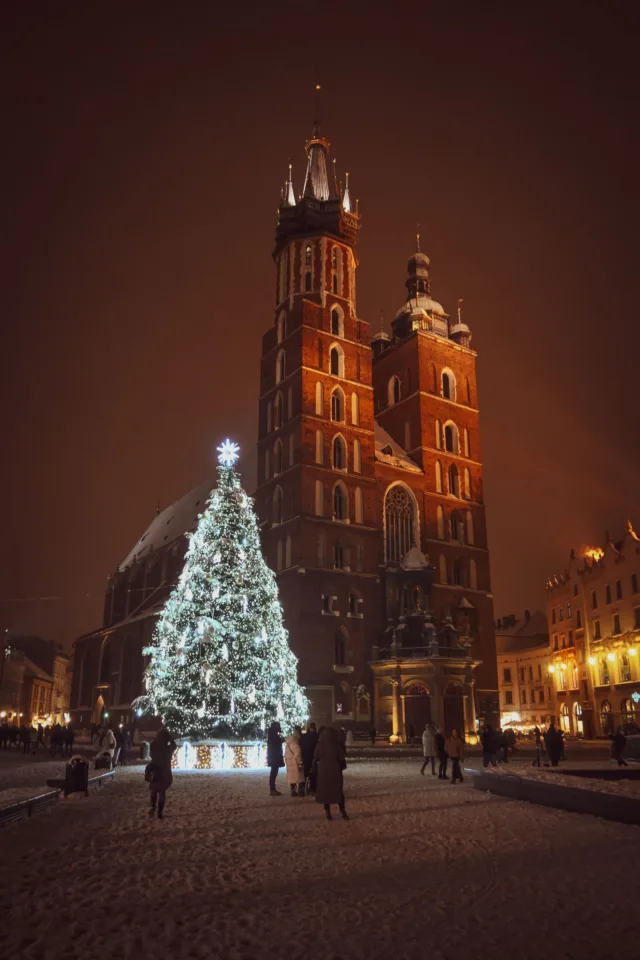
- December brings one of Poland’s best Christmas markets to the Main Square, with mulled wine and crafts under the Cloth Hall.
- Deep winter (January–February) is cold and can be grey, but it’s the quietest and cheapest time to come.
For a month-by-month breakdown see our guide to the best time to visit Kraków, and check the current forecast before you pack.
How long to stay
Two full days is enough to see the heart of the city without rushing; three lets you slow down and add Kazimierz and the WWII sites properly. If you want to visit the salt mine, the Auschwitz memorial or the mountains, add a day for each — those trips take most of a day on their own.
A common, comfortable plan is three days in the city plus one or two day trips. Our 2- and 3-day Kraków itinerary maps it out hour by hour.
Getting there and around
Kraków Airport (Kraków–Balice, named after John Paul II) is about 11 km west of the centre. The simplest way in is the airport train to Kraków Główny, the main station, which takes roughly 20 minutes; taxis and ride-hailing apps also run around the clock. Full details are in our airport-to-centre guide.
Once you’re in, you’ll mostly walk — the Old Town is pedestrian-friendly and compact. For anything further (Kazimierz by night, Schindler’s Factory, the outer districts) the city has an extensive tram and bus network. Buy tickets from machines at stops, on board, or through a mobile app, and validate them when you board. See getting around Kraków for tickets and routes.
Where to stay
Most visitors base themselves in one of three areas:
- The Old Town (Stare Miasto) puts you within walking distance of almost everything, at the highest prices — and, right on the square, some late-night noise.
- Kazimierz is the atmospheric choice: the best food and bars, a short walk from the square, and generally better value.
- Podgórze, across the river, is quieter and close to Schindler’s Factory — a good pick if you want calm and don’t mind a short tram ride.
Staying near Kraków Główny is also handy if you’re planning several day trips. See our full guide to where to stay in Kraków.
Top things to see
If you only have a couple of days, build them around these:
- Main Market Square, the Cloth Hall and St Mary’s Basilica. The square is the city’s living room; inside St Mary’s is Veit Stoss’s vast carved altarpiece, and every hour a trumpeter plays the hejnał from the tower, breaking off mid-note.
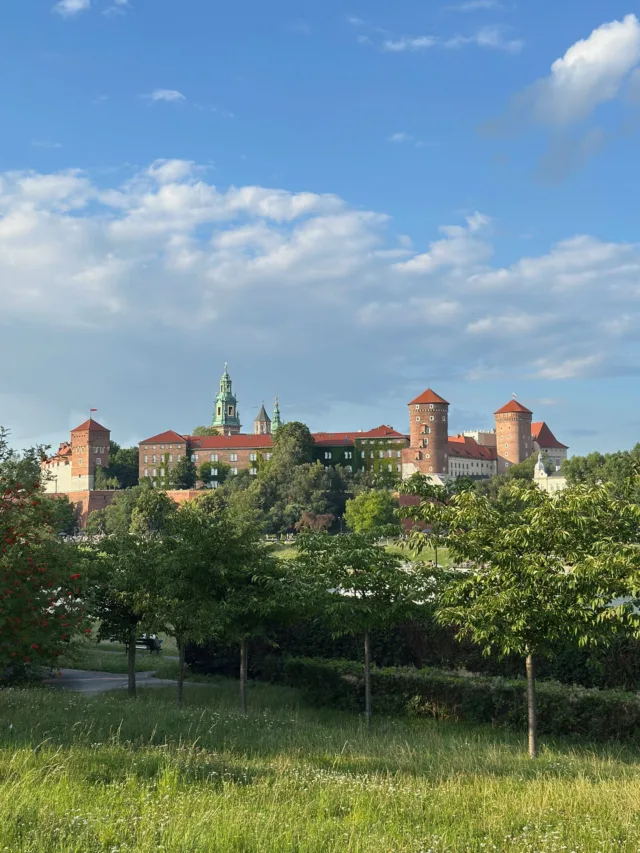
- Wawel. The royal castle and cathedral on the hill above the Vistula, plus the dragon’s den (Smocza Jama) beneath it. Read our Wawel visitor guide.
- Kazimierz. The former Jewish quarter — synagogues, atmospheric squares and the city’s best bars and street food. See the Kazimierz guide.
- Schindler’s Factory. Oskar Schindler’s former enamel works, now a powerful museum on Kraków under Nazi occupation. More in our Schindler’s Factory guide.
For the full rundown, see the top things to do in Kraków.
Best day trips
Kraków’s surroundings are a big part of what brings people here:
- Auschwitz-Birkenau — the former camp and State Memorial, about 70 km west; a sobering visit that takes most of a day with travel. Book a timed entry in advance through the official memorial site, and see how to visit from Kraków.
- Wieliczka Salt Mine — a UNESCO-listed warren of chapels and chambers carved from rock salt, just southeast of the city. Wieliczka guide.
- Zakopane and the Tatras — Poland’s mountain resort, a longer trip south, good for hiking in summer and a very different pace. Zakopane guide.
Compare options and travel times in the best day trips from Kraków.
Food and drink
Polish food is hearty and cheap, and Kraków does it well. Try pierogi (filled dumplings), żurek (sour rye soup), and a zapiekanka — the open-faced toasted baguette sold from the round kiosk on Plac Nowy in Kazimierz. Pick up an obwarzanek, the ring-shaped bread sold from blue carts all over the Old Town. Milk bars (bar mleczny) serve no-frills home cooking at low prices — a canteen tradition worth trying at least once. After dark, Kazimierz has the densest run of bars in the city, while the Old Town’s cellars hide everything from jazz clubs to vodka bars.
What it costs
Kraków is one of the better-value city breaks in Europe: eating, drinking and getting around all cost noticeably less than in Western capitals. Street food and milk bars are very cheap, mid-range restaurants are reasonable, public transport and most museum tickets are modest, and cards work almost everywhere. You can do the city comfortably without a big budget — our guide to Kraków on a budget has current prices and money-saving tips.
Practical essentials
Money
Poland uses the złoty (PLN), not the euro. Cards are accepted almost everywhere, including contactless on public transport and in taxis; carry a little cash for markets and milk bars.
Language
The language is Polish, but English is widely spoken in hotels, restaurants and anywhere tourist-facing. A few words — dzień dobry (hello), dziękuję (thank you) — go a long way.
Safety
Kraków is a safe city by European standards. Use the usual care with pickpockets in crowds and around the station, and stick to licensed or app-based taxis.
Tipping
Rounding up or around 10% in restaurants is normal and appreciated; it isn’t expected in bars or for counter service.
Frequently asked questions
Yes — it’s one of Central Europe’s most rewarding city breaks, combining an intact medieval centre, deep history and low prices, with major day trips on its doorstep.
Two to three days for the city itself, plus a day for each major trip (Wieliczka, Auschwitz-Birkenau or the mountains).
No — it’s noticeably cheaper than most of Western Europe for food, drink and transport, which is part of its appeal.
The Old Town for convenience, Kazimierz for atmosphere and value, or Podgórze for a quieter base near Schindler’s Factory.
Yes, it’s generally very safe; take normal big-city precautions against pickpockets in crowded spots.
Yes, but not comfortably on the same day — each takes most of a day. Plan one per day.
In tourist areas, widely. Away from the centre it’s less common, but you’ll manage easily with the main sights and transport.
Official sources: Kraków Airport · Auschwitz-Birkenau Memorial · Wieliczka Salt Mine