Kazimierz: Krakow’s Jewish Quarter
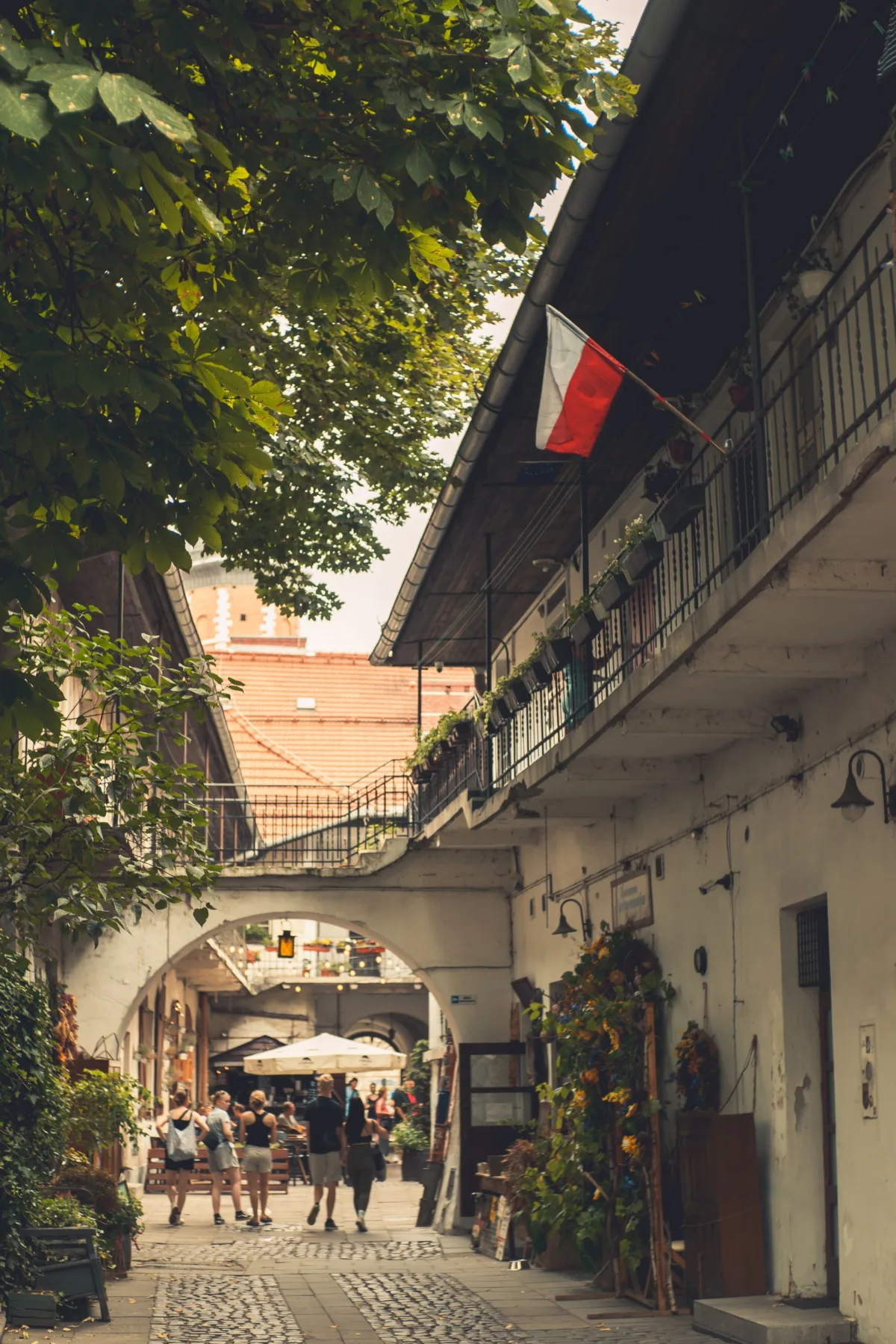
Kazimierz is Kraków’s most atmospheric quarter — for centuries the centre of Jewish life in the city, and today its most characterful district for wandering, eating and going out. A short walk south of the Old Town, it rewards an unhurried half-day, and most visitors wish they had given it more. This guide covers its history, what to see and how to make the most of it. For the wider picture, see our Kraków travel guide and things to do in Kraków.
A short history
Kazimierz began in 1335 as a separate town, founded by King Casimir the Great and named after him. At the end of the 15th century, when Jews were required to leave Kraków’s Old Town, they resettled here, and Kazimierz became the home of one of the most important Jewish communities in Europe. For centuries Jewish and Christian Kazimierz grew side by side, each with its own churches, synagogues and market squares; this was where the great 16th-century scholar Rabbi Moses Isserles, after whom the Remuh synagogue and cemetery are named, taught and is buried.
The Second World War ended that world. The Jewish population was forced across the river into the Podgórze ghetto and murdered; Kazimierz fell into decades of neglect afterwards. Its revival began only in the 1990s, helped along by the filming of Schindler’s List in these streets, and the quarter has since become one of the liveliest parts of the city — without erasing the memory of what was lost.
Jewish Kazimierz
The heart of Jewish Kazimierz is Szeroka Street and the lanes around it, where several historic synagogues survive:
- The Old Synagogue (Stara Synagoga) — the oldest surviving synagogue building in Poland, now a museum of Jewish history and tradition.
- The Remuh Synagogue, small and still in active use, beside the 16th-century Remuh Cemetery, one of the oldest Jewish cemeteries in Europe, with a striking “wailing wall” of broken headstones.
- The Izaak, Tempel, High, Kupa and Popper synagogues, each with its own history and style — from Baroque to 19th-century Reform.
Further out, on Miodowa Street, lies the larger New Jewish Cemetery, and the Galicia Jewish Museum tells the story of Jewish life across the region through contemporary photography. If you visit the cemeteries, men are asked to cover their heads, and all visitors to dress and behave respectfully.
Catholic Kazimierz
The quarter was never only Jewish. The soaring Gothic Corpus Christi Church and nearby St Catherine’s anchor its Christian side, and on a rise above the river stands the Skałka church, with a crypt that holds some of Poland’s most distinguished artists and writers. They’re a reminder that Kazimierz was, for most of its life, two communities sharing one small town.
The other Kazimierz: food, markets and nights out
Kazimierz is also simply a wonderful place to wander. Plac Nowy, the market square at its centre, has a round brick hall — the Okrąglak — whose hatches sell the city’s best zapiekanki late into the night, with a flea and vintage market spilling across the square by day. The streets around it hold the densest run of bars, cafés and small restaurants in Kraków, from candlelit cellars to courtyard gardens. It’s the obvious place to spend an evening, and the food runs from traditional Jewish and Polish cooking to everything modern.
When to go and what’s on
Kazimierz is good at any time, but it comes alive in the evening. In early summer the Jewish Culture Festival — one of the largest of its kind in the world, running since the late 1980s — fills Szeroka Street with concerts, workshops and a famous open-air finale. Check what’s on during your visit if your dates are flexible.
Practical tips
- Getting there. An easy 10–15 minute walk south from the Main Market Square, or a short tram ride; the quarter itself is best explored on foot.
- Cost. Wandering is free; individual synagogues and museums have modest entry fees, and a combined ticket covers several of the synagogues.
- A walking route. Start on Szeroka Street with the Old and Remuh synagogues, loop past the Izaak and High synagogues, then end at Plac Nowy for food and a drink.
- Combine it. Cross the Bernatek Footbridge to Podgórze and Schindler’s Factory to continue the wartime story.
Frequently asked questions
It was the centre of Jewish Kraków for centuries; today it’s known for its synagogues and memory sites alongside the city’s best food, bars and markets.
It’s a 10–15 minute walk south from the Main Market Square, or a short tram ride.
A half-day lets you see the main synagogues and still have time to wander, eat and have a drink; many visitors return in the evening.
Partly — some scenes were shot in Kazimierz, though the wartime ghetto itself was across the river in Podgórze, near Schindler’s Factory.
Men are asked to cover their heads in active synagogues and at the Jewish cemeteries; all visitors should dress and behave respectfully.
Yes — it’s one of the busiest nightlife areas in the city; take the usual care you would anywhere with crowds and late bars.