Things to Do in Krakow: Top Sights and Experiences
Kraków’s great advantage is how tightly its sights are packed: almost everything in this list sits inside the Old Town and Kazimierz, within easy walking distance of each other. Here are the things worth your time, from the unmissable to a few that reward a slower second day. For a full trip plan, start with our Kraków travel guide.
1. Spend time on the Main Market Square
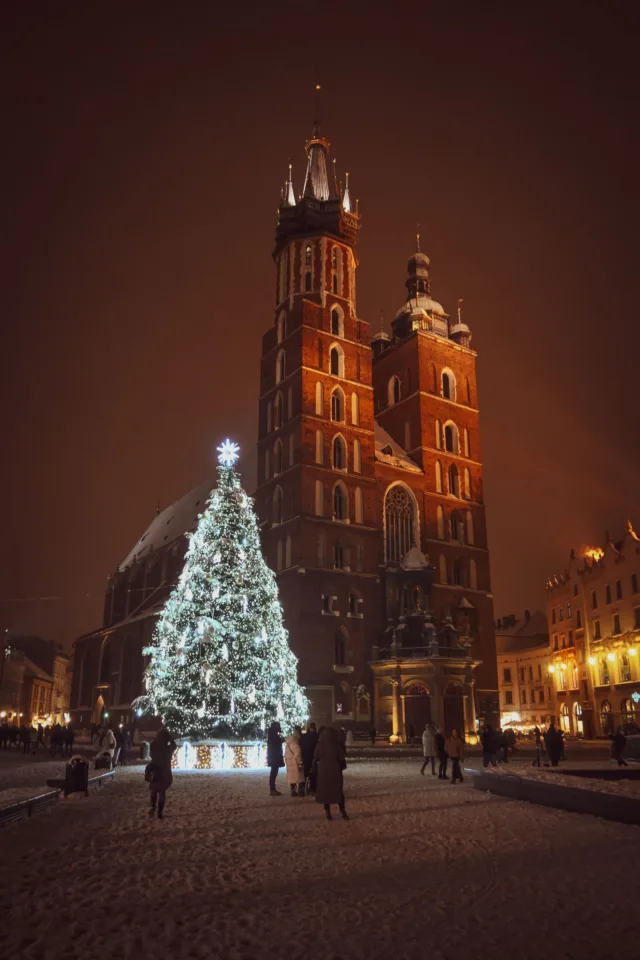
The Rynek Główny is one of the largest medieval squares in Europe and the obvious place to begin. At its centre stands the Renaissance Cloth Hall (Sukiennice), a covered market hall that has sold goods for seven hundred years and still trades in amber and crafts on the ground floor, with a gallery of 19th-century Polish painting upstairs. Ring the square with a coffee, watch the pigeons and the flower sellers, and listen for the hejnał — the trumpet call played from St Mary’s tower every hour, on the hour.
2. Step inside St Mary’s Basilica
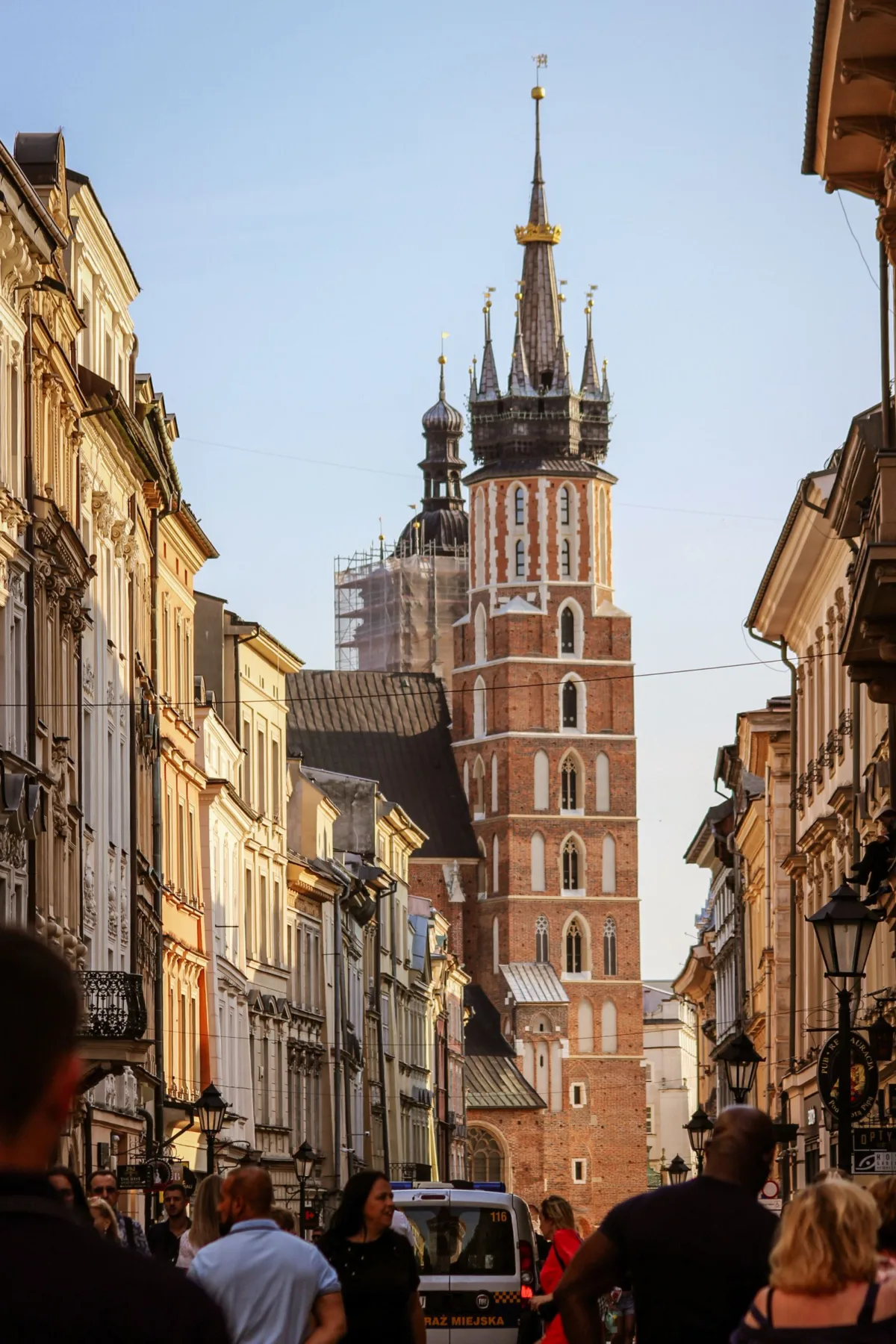
The twin-towered brick church on the square holds one of the great works of Gothic art: the vast carved and painted altarpiece by Veit Stoss, opened each morning in a small ceremony. The two towers are famously unequal — a detail wrapped in a local legend about two rival brothers. In season you can climb the taller tower for a view over the rooftops; the trumpeter plays the hejnał from the top, breaking off mid-note as he has for centuries.
3. Climb Wawel Hill
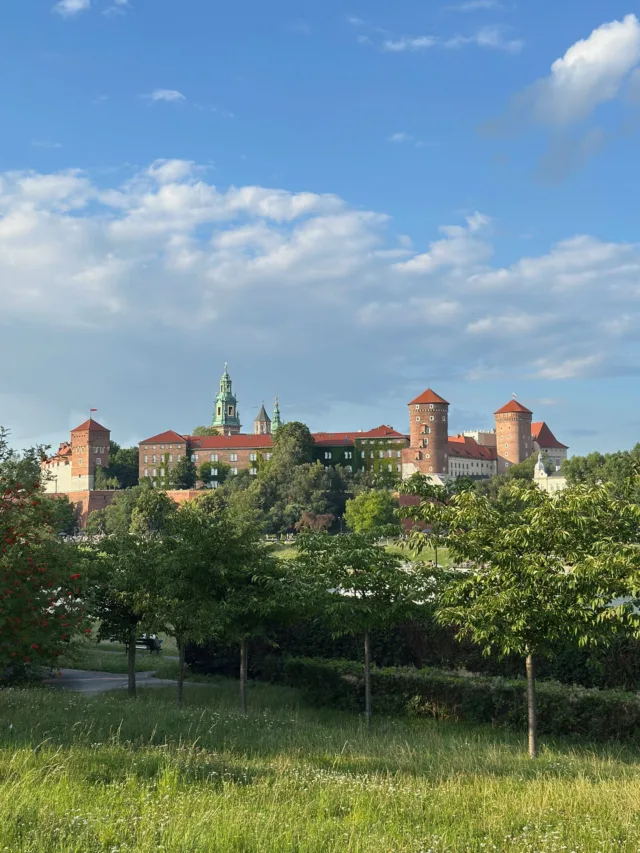
The royal castle and cathedral crown the hill above the Vistula. The cathedral was the coronation and burial church of Polish kings — its royal tombs and the great Sigismund Bell are the highlights — while the castle’s state rooms and treasury show how the court lived. Beneath the hill is the dragon’s den (Smocza Jama), which ends at a fire-breathing bronze dragon by the river. Tickets are split by section and the popular ones sell out, so plan ahead; our Wawel visitor guide explains how it works.
4. Wander Kazimierz
The former Jewish quarter is the most atmospheric part of the city. For five hundred years this was the centre of Jewish Kraków, and its synagogues and the old cemetery beside the Remuh Synagogue still stand; the Old Synagogue, now a museum, is the oldest surviving synagogue building in Poland. Today Kazimierz is also where locals come to eat and drink — Plac Nowy for a late-night zapiekanka, the side streets for bars and cafés. See the full Kazimierz guide.
5. Confront the war at Schindler’s Factory
Across the river in Podgórze, Oskar Schindler’s former enamel factory houses an absorbing museum on Kraków under Nazi occupation between 1939 and 1945. It tells the story of the city and its people, with Schindler’s own as one thread; allow a couple of hours and book ahead, as timed tickets go quickly. More in our Schindler’s Factory guide. Nearby, Ghetto Heroes Square (Plac Bohaterów Getta) is marked by a memorial of empty bronze chairs, and the contemporary art museum MOCAK sits next door to the factory.
6. Go underground beneath the square
The Rynek Underground museum lies directly below the Main Market Square — a walk through the medieval market’s foundations, with excavated streets, merchants’ stalls and multimedia bringing the old trading town to life. It’s a good option for a wet afternoon and a different angle on the city’s history.
7. Walk the Royal Route and the city walls
The Royal Route (Droga Królewska), the ceremonial path kings took to their coronations, runs from the northern edge of the Old Town down to Wawel. It begins at St Florian’s Gate — the last surviving medieval city gate — and the Barbican, a round brick fortress that once guarded the approach. The rest of the walls are long gone, replaced in the 19th century by the Planty, a green ring of park that circles the Old Town and makes an easy, shady loop.
8. See the oldest university building
Kraków’s university, founded in 1364, is one of the oldest in Central Europe, and its earliest surviving college, the Collegium Maius, is a short walk from the square. The Gothic arcaded courtyard is free to enter; guided tours take you inside to see historic lecture halls and old scientific instruments. Nicolaus Copernicus studied at the university in the 1490s.
9. Cross the river at the Bernatek Footbridge
The Father Bernatek Footbridge links Kazimierz with Podgórze over the Vistula, strung with lovers’ padlocks and hung with acrobat sculptures that seem to swing above the water. It’s a short, pretty walk, and the riverside boulevards on either bank are where the city comes out to stroll, run and watch the sunset behind Wawel.
10. Take a day trip
Some of the region’s biggest draws are an easy ride away: the UNESCO-listed Wieliczka Salt Mine, the Auschwitz-Birkenau Memorial, and the mountain town of Zakopane in the Tatras. Each takes most of a day, so build them in as separate outings rather than cramming two into one. See the best day trips from Kraków.
11. Catch what’s on
Kraków has a full calendar of festivals and events across the year, from film and music to the December Christmas market on the Main Square. Check what’s on during your visit, and see our guide to the best time to visit if you’re still choosing dates.
How to fit it together
Two days covers the essentials — the square, St Mary’s, Wawel and Kazimierz, with Schindler’s Factory if you move briskly. A third day lets you slow down, add the Rynek Underground or Collegium Maius, and still leave time for a coffee on the square. For an hour-by-hour plan, see our 2- and 3-day Kraków itinerary.
Frequently asked questions
Start on the Main Market Square and inside St Mary’s Basilica, then climb Wawel Hill — together they are the heart of the city and easy to see in a single day.
Two days for the main sights, three to add Kazimierz, the war history and a slower pace. Add a day for each major trip outside the city.
Plenty indoors: St Mary’s Basilica, the Rynek Underground museum, Schindler’s Factory, Wawel’s state rooms and the galleries in the Cloth Hall.
Very — the sights cluster in a compact, walkable centre, so a weekend goes a long way here.
Walk the Main Square and the Royal Route, loop the Planty park, see the Barbican and St Florian’s Gate from outside, cross the Bernatek Footbridge and step into the Collegium Maius courtyard — all free.