Wawel Castle and Cathedral: A Visitor’s Guide
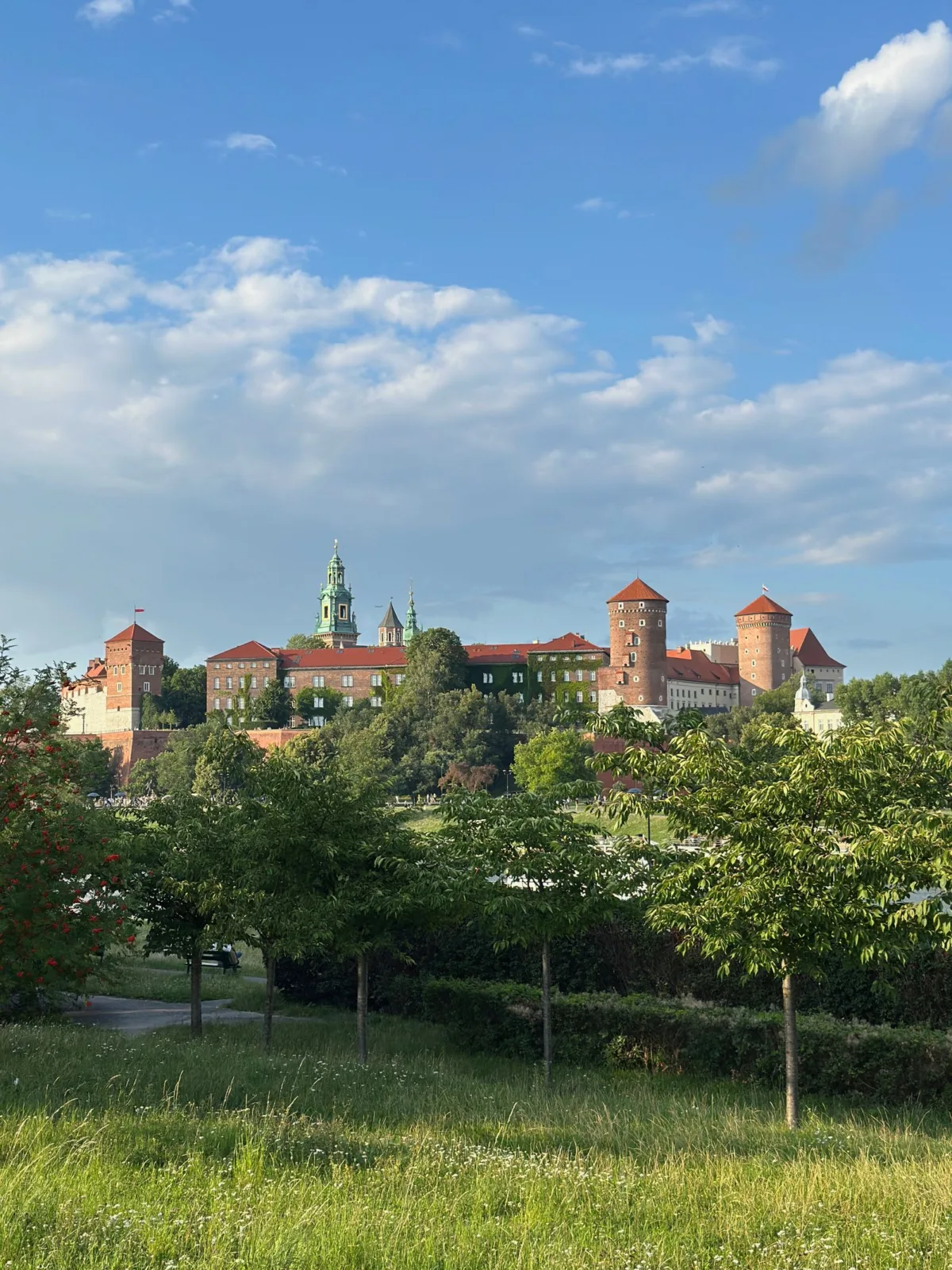
Wawel is where Poland’s story begins. The hill above the Vistula has been the seat of power for a thousand years, and today it holds the royal castle, the cathedral where kings were crowned and buried, and — in the rock beneath — the lair of the city’s legendary dragon. It’s the single most important place in Kraków — if you see only one thing here, make it Wawel. This guide covers what to see, how the tickets work and how to plan your time. For the wider picture, see our Kraków travel guide and things to do in Kraków.
A thousand years on one hill
People have built on Wawel since at least the 10th century, when the first Polish rulers raised a stronghold and the earliest churches here. By the 14th century it was the coronation seat of a united kingdom, and in the 16th century King Sigismund I turned the medieval castle into a magnificent Renaissance residence, bringing Italian architects to build the arcaded courtyard that still defines it. Even after the court moved to Warsaw in 1596, kings kept returning to Wawel to be crowned and, in the end, to be buried. Under the 19th-century partitions the Austrians used the hill as barracks; its restoration into a national monument is itself part of the story you see today.
Wawel Cathedral
The cathedral was the coronation and burial church of the Polish monarchy, and it remains the national pantheon — a building layered with centuries of history that rewards a slow look.
Its chapels are the highlight. The gilded dome of the Sigismund Chapel, built in the 1520s, is often called the finest piece of Renaissance architecture north of the Alps; beside it, the black-domed Vasa Chapel answers it in Baroque. Below the church, the royal crypts hold kings and queens going back to the Middle Ages, together with the national heroes buried among them — Tadeusz Kościuszko, Józef Piłsudski, General Sikorski, the Romantic poets Mickiewicz and Słowacki, and more recent national figures. High in the bell tower hangs the Sigismund Bell, cast in 1520 and rung only on the most important occasions; you can climb the wooden stairs to stand beside it, and tradition says touching its clapper brings luck.
The Royal Castle
The castle is not one museum but several, each with its own ticket, arranged around the elegant Renaissance courtyard:
- The State Rooms — the grand reception halls, hung with the famous Jagiellonian tapestries commissioned by King Sigismund Augustus, and crowned by the Envoys’ Hall with its ceiling of carved wooden heads.
- The Royal Private Apartments — the more intimate rooms where the court actually lived, seen on a guided visit.
- The Crown Treasury and Armoury — royal regalia and weapons, including Szczerbiec, the coronation sword of Polish kings.
- The Oriental Art collection — Ottoman tents, banners and arms, much of it linked to the Polish victory at the Battle of Vienna in 1683.
- “Lost Wawel” — an underground walk through the hill’s earliest buildings, including the remains of a rotunda from around the turn of the 11th century, one of Poland’s earliest stone churches.
You don’t have to see everything. Pick one or two that appeal — the State Rooms are the usual choice — and leave time for the courtyard and the views.
The Dragon’s Den and the legend
Every child in Poland knows the story: long ago a dragon lived in the cave beneath Wawel and terrorised the town, until a clever cobbler’s apprentice left out a sheep stuffed with sulphur. The dragon ate it, grew so thirsty it drank half the Vistula, and burst. The Dragon’s Den (Smocza Jama) is a real cave you can walk down through in the warmer months, emerging by the river beside a bronze dragon that breathes real fire — a favourite with children. It’s a small, separate attraction with its own entrance on the hill.
The grounds and the view
You can walk up onto Wawel Hill and around its grounds for free, without a ticket for any of the museums. It’s worth doing just for the outlook over the Vistula and the terracotta rooftops of the Old Town, especially in the late afternoon, and for the sheer sense of the place.
Tickets and practical tips
- Separate, timed tickets. The castle exhibitions, the cathedral and the Dragon’s Den are ticketed individually; the hill and courtyards are free.
- Book ahead. Numbers are capped and timed, and the popular exhibitions sell out in high season — reserve online before you go.
- Free days. Some castle exhibitions release a limited number of free tickets on one day each week, usually outside peak season; check the current schedule if that matters to you.
- Time needed. Allow two to three hours for the cathedral plus a couple of exhibitions; a full morning if you want to see most of it.
- Getting there. Wawel sits at the southern end of the Old Town, a short walk down the Royal Route from the Main Market Square.
- Combine it. From the foot of the hill it’s a riverside stroll to Kazimierz.
Suggested visit
A good half-day plan: start with the cathedral and the royal crypts, climb to the Sigismund Bell, then choose one castle exhibition — the State Rooms for most people — before walking the courtyard and the viewpoints. In summer, finish by descending the Dragon’s Den to the river. That covers the essence of Wawel in two to three hours without feeling rushed.
Frequently asked questions
Yes — it’s the historic heart of Poland, with the royal castle, the coronation cathedral and the dragon’s den all on one hill above the river.
Two to three hours covers the cathedral and a couple of castle exhibitions; walking the grounds alone takes less, seeing everything takes longer.
For the castle exhibitions and the cathedral, yes — numbers are limited and timed, and they sell out in summer. The hill itself is free.
The State Rooms, for the grand halls, the Jagiellonian tapestries and the carved heads of the Envoys’ Hall.
Yes — a bronze dragon at the foot of the hill, by the river, breathes real flames; it’s reached through the Dragon’s Den cave in the warmer months.
You can walk the hill, the courtyards and the viewpoints for free; the museums and the cathedral interior need tickets, though some exhibitions have a limited free day each week.