In the Footsteps of John Paul II: A Kraków Walk
Long before he became Pope John Paul II, Karol Wojtyła was a Kraków man — a student, an actor, a quarry and factory worker under the occupation, then a priest, bishop and cardinal of the city. His Kraków can be walked in an afternoon, and it joins some of the most important places of his life with the ordinary streets he knew. For the wider picture, see our Kraków travel guide and things to do in Kraków.
The route at a glance
- Core: the Old Town and Wawel — walkable in a half-day.
- Optional: the Łagiewniki sanctuaries south of the centre, reached by tram, for a fuller day.
- Good for: anyone interested in the city’s recent history, not only pilgrims.
The Archbishop’s Palace and the “papal window”
Begin at the Archbishop’s Palace on Franciszkańska Street, where Wojtyła lived as archbishop of Kraków. The window above the gateway — the “papal window” — is where, on his returns as Pope, he spoke late into the night with crowds of young people gathered below. After his death in 2005 the street filled with candles; it remains a place of quiet pilgrimage.
The Franciscan Church
Across the street stands the Franciscan Church, his favourite place of prayer in the city, famous for the luminous Art Nouveau stained glass of Stanisław Wyspiański — including the great God the Father window above the entrance. It is one of the most beautiful church interiors in Kraków, and easy to miss.
Wawel Cathedral
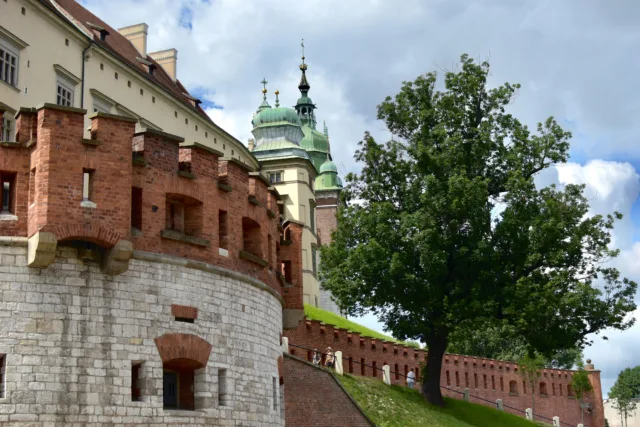
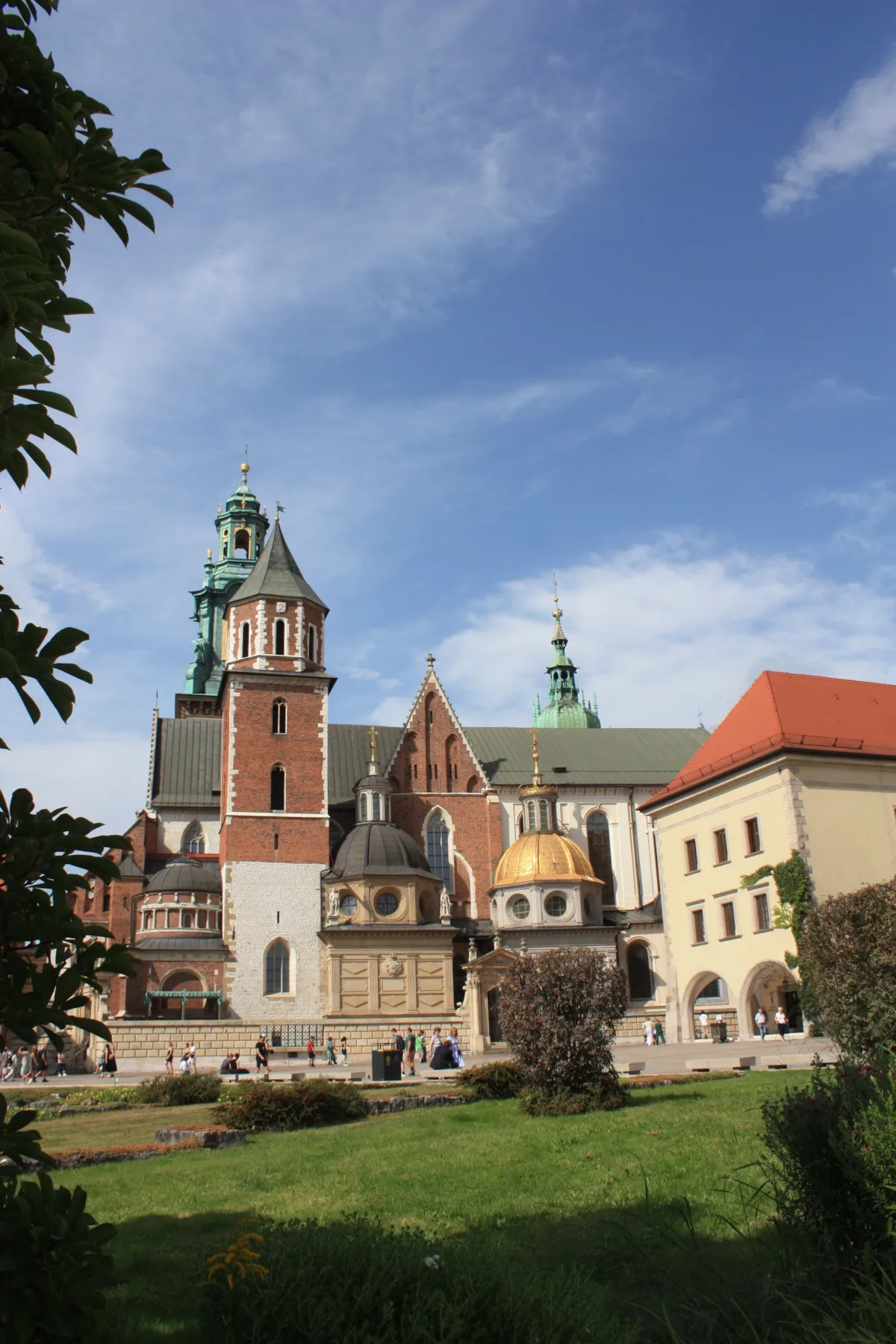
Walk up Grodzka and Kanonicza streets to Wawel Cathedral, the coronation and burial church of Polish kings. It was here, in the crypt of St Leonard, that the newly ordained Wojtyła celebrated his first Mass in 1946. The cathedral is the spiritual heart of the route; see our Wawel guide for visiting details.
The working city
Wojtyła’s Kraków was not only churches. During the war he studied in secret and worked at the Solvay chemical plant and a nearby quarry in the south of the city — experiences that shaped him deeply. These sites are off the central route, but they are part of why Kraków, more than Rome, felt like his home.
Łagiewniki: the sanctuaries
For a fuller day, take a tram south to Łagiewniki, where two great sanctuaries stand side by side: the Divine Mercy Sanctuary, linked to St Faustina and a message John Paul II promoted worldwide, and the large St John Paul II Sanctuary built in his memory. Together they draw pilgrims from across the world; check current opening times before you go.
Practical tips
- Getting around. The Old Town section is an easy walk; Łagiewniki is a short tram ride south and best added as a separate half-day.
- Cost. The churches are free to enter (donations welcomed); Wawel Cathedral’s crypts and tower charge a modest ticket.
- Respect. These are active places of worship and pilgrimage — dress and behave accordingly, especially during services.
- Combine it. The core route overlaps the Royal Route and ends at Wawel.
Frequently asked questions
A walk linking the places tied to Karol Wojtyła’s life in the city — where he lived, prayed, studied, worked and said his first Mass — before and during his years as archbishop of Kraków, and before he became Pope John Paul II.
As archbishop he lived at the Archbishop’s Palace on Franciszkańska Street. The window above its gateway — the “papal window” — is where, on his returns as Pope, he spoke with crowds gathered below.
In the crypt of St Leonard beneath Wawel Cathedral, in 1946, shortly after his ordination. Wawel Cathedral is the spiritual heart of the route.
Two sanctuaries stand side by side south of the centre: the Divine Mercy Sanctuary, linked to St Faustina, and the large St John Paul II Sanctuary built in his memory. Both draw pilgrims from around the world.
The Old Town core is a comfortable half-day on foot. Add the Łagiewniki sanctuaries, a short tram ride south, for a fuller day.
No. The places are central to Kraków’s recent history and to one of the 20th century’s most influential figures, which makes the walk rewarding for anyone, not only pilgrims.
Comments
No comments yet — be the first on the forum.
Add a comment on the forum →