Manggha: The Museum of Japanese Art in Kraków
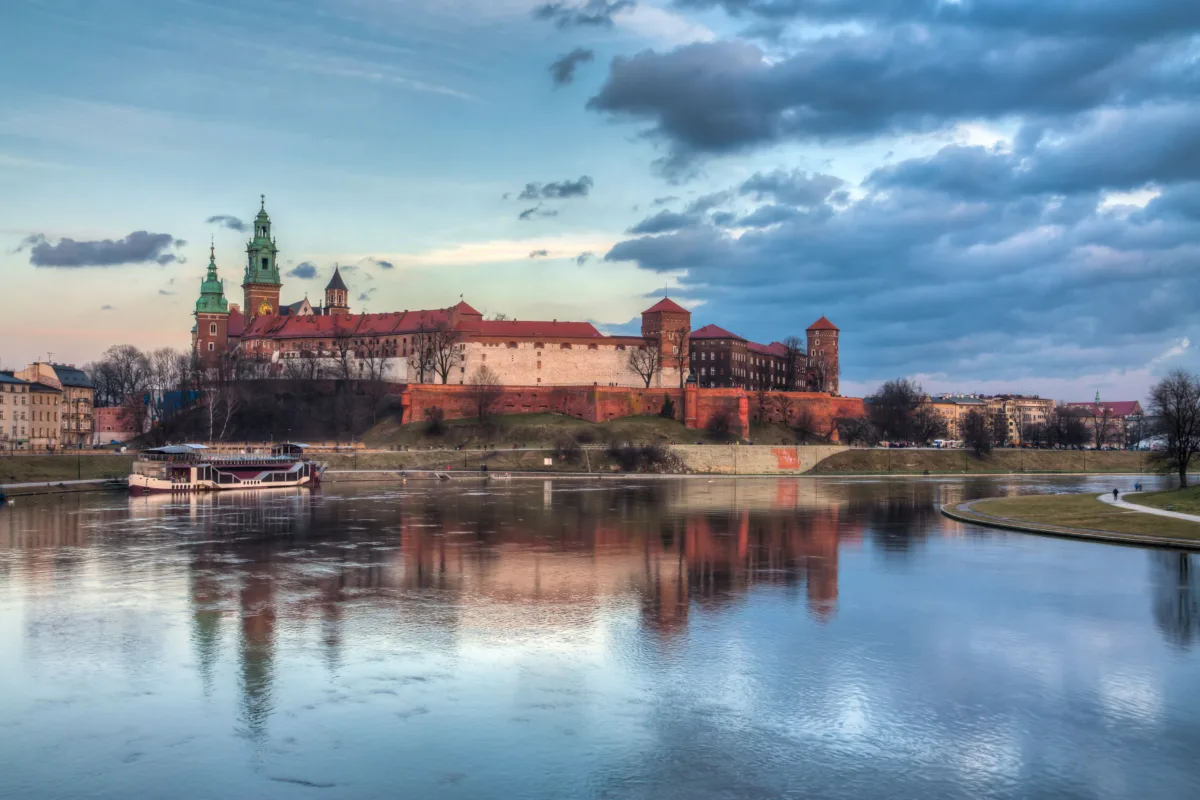
On the far bank of the Vistula, with one of the best views of Wawel in the city, stands one of Kraków’s most unexpected museums: Manggha, a centre of Japanese art and technology born from a Polish love affair with Japan. It is a calm, beautiful stop a short walk from the castle. For the wider picture, see our Kraków travel guide and Kraków museums guide.
The story behind it
The museum grew from the remarkable collection of Japanese art assembled a century ago by Feliks “Manggha” Jasieński — thousands of woodblock prints (ukiyo-e), textiles, ceramics and arms. The building that houses it, opened in 1994, was initiated by the film director Andrzej Wajda, who devoted his Kyoto Prize to the project, and designed by Arata Isozaki with a wave-like roof echoing the river beside it.
What you see
Manggha shows changing exhibitions of Japanese prints, crafts and design drawn from the collection and beyond, alongside contemporary Japanese culture, a tea pavilion and a garden. The riverside setting, with Wawel rising across the water, is part of the pleasure — many visitors come as much for the view and the quiet as for the art.
Practical tips
- Tickets. Modest entry; check current hours and any temporary exhibitions on the museum’s website.
- Getting there. On the Vistula’s right bank opposite Wawel — a short, scenic walk across the river, or a tram ride.
- Combine it with Wawel and a stroll along the Vistula Boulevards.
- Don’t rush — the café and garden make it a restful break rather than a quick tick-off.
Frequently asked questions
A centre of Japanese art and technology on the Vistula opposite Wawel, built around Feliks Jasieński’s historic collection of Japanese woodblock prints, textiles and crafts. It opened in 1994 on the initiative of the director Andrzej Wajda.
After the nickname of the collector Feliks “Manggha” Jasieński, itself a nod to the sketchbooks of the Japanese artist Hokusai.
Changing exhibitions of Japanese prints, crafts and design from the collection and beyond, plus contemporary Japanese culture, a tea pavilion and a garden — with a fine view of Wawel across the river.
On the right bank of the Vistula opposite Wawel Castle — a short, scenic walk across the river from the Old Town, or a tram ride.
Yes, especially if you want something beyond Kraków’s Gothic and Baroque sights. The collection, the riverside building and the view of Wawel make it a calm, rewarding stop.
Comments
No comments yet — be the first on the forum.
Add a comment on the forum →